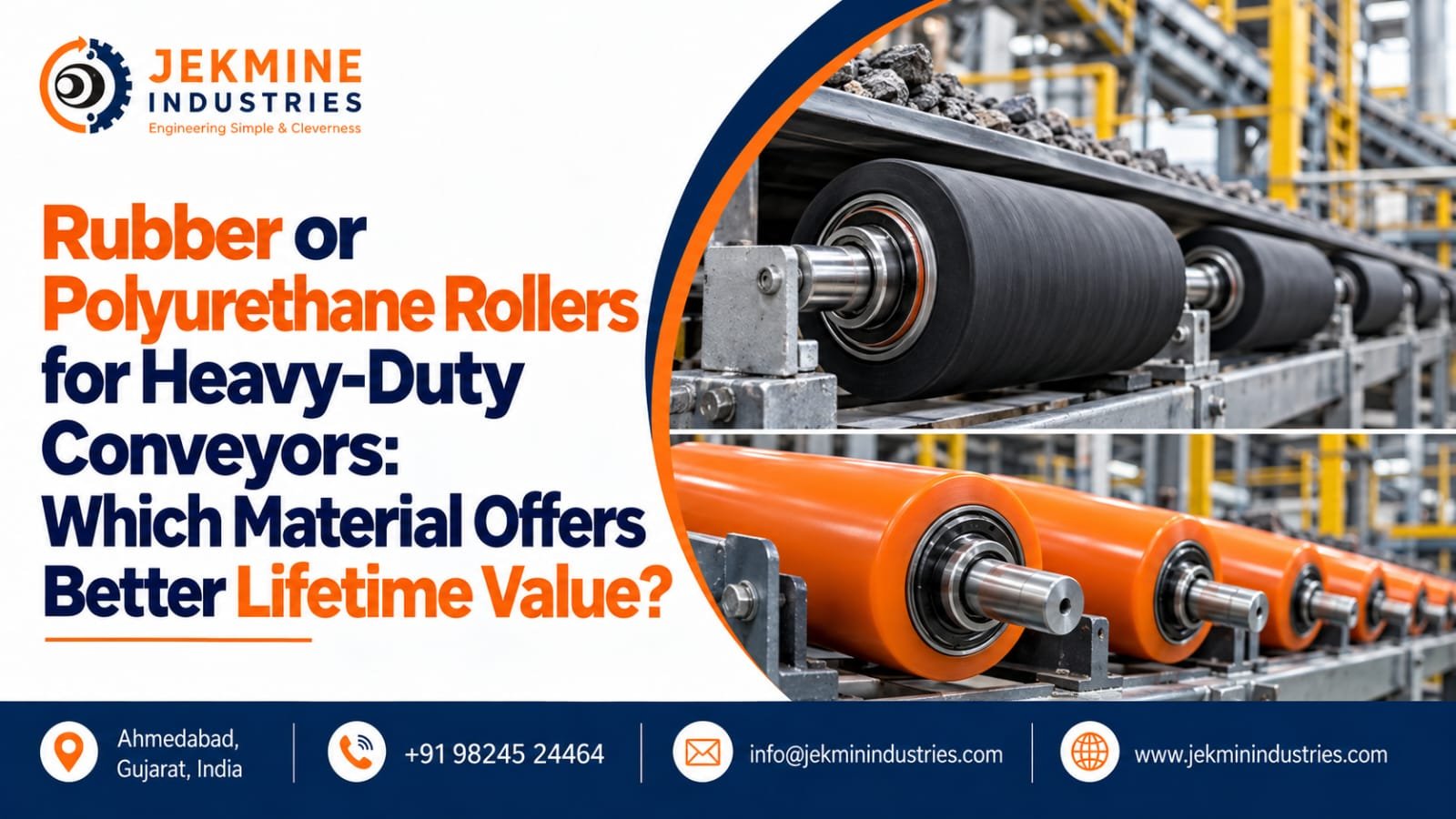
Industrial conveyor systems can work properly only when the right roller material is chosen. The options of rubber rollers and polyurethane are chosen according to the specific needs of the industries. Rubber rollers are already popular across various industries and that is clearly reflected through the fact that the market value was nearly 3.8 billion dollars last year. According to experienced rubber roller manufacturers, the rollers are flexible and good for absorbing shock due to movement. The polyurethane rollers are good at handling abrasion and are thus very much durable. It is the load conditions, environment for operation and replacement frequency that contribute to be the determining factors for the final choice.
Rubber and polyurethane rollers: Behaviour of materials under heavy load
Industrial rubber rollers provide great flexibility, grip and absorption of vibrations. The conveyor systems carrying irregular materials and applications that require traction benefit most by using rubber rollers. While we are comparing rubber vs. polyurethane rollers, it needs mentioning that the second option provides better resistance against abrasion, tearing and surface wear. The formulation of the polyurethane, the hardness and load distribution have direct impact on the performance of the polyurethane rollers.
Abrasion resistance: When does this factor matter?
The conveyor systems which transport gritty materials, aggregates or other components that rub against the roller surface must be made with abrasion-resistant rollers. And this is why the polyurethane rollers are the best for such systems. Rubber coated roller will provide cushioning and traction but not protection against abrasive materials and it will wear out very quickly.
Impact of moisture, temperature and chemicals
You will get to know about the impact of moisture, temperature and chemicals on conveyor rollers from any experienced PU roller manufacturer. They formulate the different materials and thus it is the polyurethane roller manufacturer who will tell you clearly about the best option for your industry.
Price comparison: Do not depend on it solely
It is not always true that the cheap rollers will deliver the lowest roller lifetime cost. Low-priced rollers will also mean frequent repairs and replacements. Go through this comparison table to understand the difference.
| Cost factor | Rubber rollers | Polyurethane Rollers |
|---|---|---|
| Initial price (approx.) | Ten thousand rupees | Fifteen thousand rupees |
| Assumed service life | 1 year | 2 years |
| Replacement over 5 years | 5 | 3 |
| Total cost (approx.) | INR 50,000 | INR 45,000 |
Things to be considered by rubber roller manufacturer before recommending PU
The load factor, speed of the conveyor, impact, and abrasiveness of the material are some of the important factors that should be considered with care when the polyurethane rollers suppliers suggest a client regarding the best choice. If you are getting in touch with a reputed rubber roller supplier in India, it is obvious that the conveyor roller supplier will ask you all the required specifications of your industry before recommending anything. If you ask the question whether polyurethane rollers are better than the rubber ones? The clear answer cannot be provided unless the detailed requirement and industry factors are discussed.
FAQs
1. Are rubber rollers very soft?
Not necessarily. Rubber is softer but not like the real soft-to-touch things.
2. Are polyurethane rollers durable?
Yes, they are very much durable as they can withstand abrasive materials.
3. How long will the polyurethane rollers last?
It depends on the materials to be carried by the rollers.